
For students entering their first DECA competition, figuring out where to begin in selecting an event they want to compete in can be a challenge.
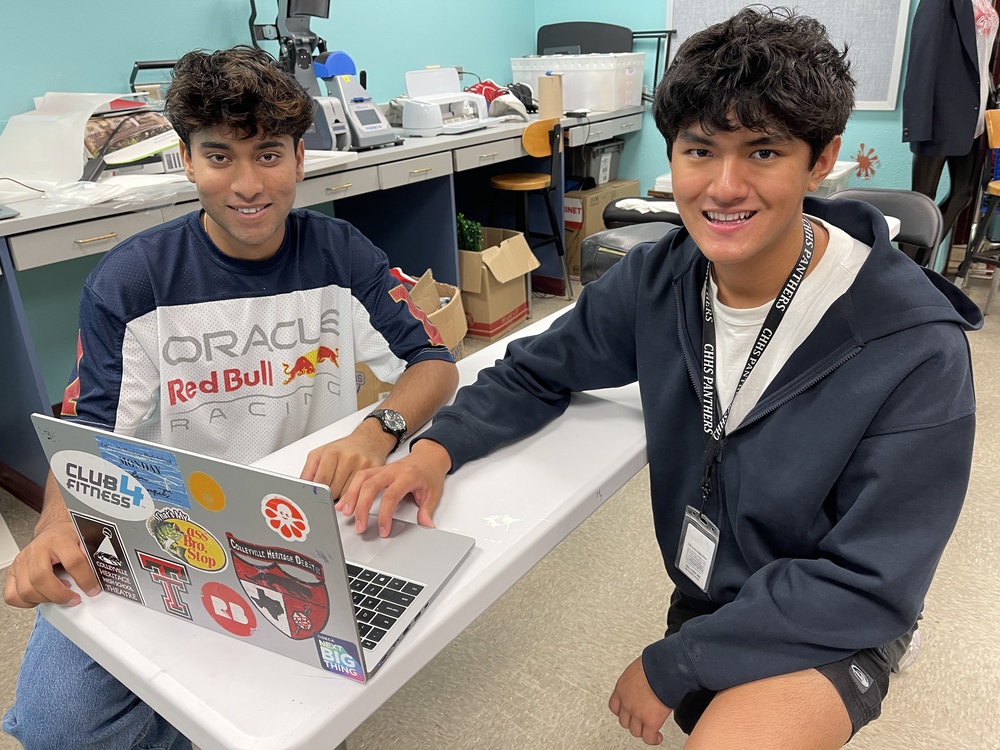
That experience sparked an idea for Colleyville Heritage High School seniors Sahan Mallampati and Ricardo Burciaga-Ichikawa.
Together they created Blue Blazer, a website that brings competition preparation and chapter activities into one place.
The website is named after the official blue blazer worn at DECA competitions. DECA is a global student organization that prepares emerging leaders and entrepreneurs for careers in marketing, finance, hospitality and management.
“I always wish I had a resource like this,” Burciaga-Ichikawa said.
Both remember being freshmen struggling to locate performance indicators—the skills and knowledge students must demonstrate in competition.
“If you wanted to make this [website] from scratch, it would take you years,” Mallampati remarked, adding that “We are able to finish everything in about five months using AI.”
Along the way, they sought guidance from website creators and professors from the University of Texas at Dallas.
Their platform’s “Road to ICDC” feature creates a personalized timeline based on a student’s event, start date and competition date, mapping out steps toward a finished project. ICDC stands for International Career Development Conference, which is DECA’s global championship event and where GCISD students have qualified to compete.
“It’s also a hub for everything DECA,” Mallampati stated. The platform also has a competition calendar, announcements, discussion spaces, an estimated 50,000 practice questions, and even a simulated stock market game, to build on students' entrepreneurial savviness.
Their goal was not only to help fellow students, but also to hopefully provide a consistent cash flow for their DECA chapter since traveling to competition takes money and their current fundraisers are primarily in the fall, but competition goes beyond that time. They are hoping their website could be fee based for other chapters to provide students guidance as they are starting.
“We not only learned how to program, we learned to cater to the needs of a larger audience,” Mallampati said. “It was worth it.”